

Travel risk · Medical intelligence · Advisors
Medical risk mapped before the trip, not after the call.
Travel dates and destinations shared in advance, the medical infrastructure at each destination mapped, and hospital liaisons made before you arrive.
- 100+Standby locations
- 24 / 7 / 365Absolute readiness
- 20+ yearsUHNW expertise
In short
Veltracon Medical prepares a trip before it starts: movements are shared in advance, medical risk is mapped against real local capability along the route, and hospital liaisons are made in advance so the direct admission pathway avoids an emergency room queue before arrival. Local capabilities, key personnel and response protocols are defined in advance. Members also receive travel security alerts based on their location, medical and security guides, global crisis warnings and a family check-in function, plus tailored travel safety reports on request and training programmes for crew. Family offices, concierges and private advisors may introduce their principals in confidence, and the clinical report after a case goes to the family and to the introducing advisor.
Preparedness is designed, not improvised.
At the highest levels, medical preparedness is not reactive, it is designed.
The most significant risk in high-stakes global travel is not security, it is the gap between a medical emergency and clinical intervention.
Before you arrive, Veltracon Medical establishes a fully briefed medical environment: local capabilities, key personnel and response protocols defined in advance.
What is in place
Local medical intelligence briefings
What local care can and cannot do, assessed for the specific destination rather than assumed.

Route mapped against real capability
Movements are shared in advance and medical risk is mapped against real local capability along the route.
Hospital liaisons made in advance
We map the medical infrastructure at each destination, with hospital liaisons made in advance to optimise reaction times in emergency scenarios. The briefing is shared with you and your security team.
Bespoke travel risk management
Preparation of the family for upcoming trips so that safety and medical care are in place wherever they go, which matters most for adventure travel.
Alerts based on your location
Travel security alerts based on GPS location, medical and security guides, and global crisis warnings, with a check-in function for family members.
Crew and staff preparation
Training programmes for crew members so they can respond effectively in an emergency and work with the hotline.
How a trip is prepared
Route
Travel dates and destinations are shared with us in advance, so we can assess the risk factors along the route and advise on the level of medical support required.
Medical intelligence briefings
We map the medical infrastructure at each destination, with hospital liaisons made in advance to optimise reaction times in emergency scenarios. The briefing is shared with you and your security team.
Preparation
Clinicians and equipment are in position before you land. The team receives you at the airport.
Constant readiness
On duty around the clock for the full stay, dedicated to a single person. Emergency rooms often run twenty-four-hour shifts. We run twelve, to guarantee quality and full focus in an emergency. Invisible unless called.
Dispatch
One number, no triage queue. On scene in minutes. Stabilisation under intensive care, not first aid.
Stabilisation and transfer
Stabilisation at the closest suitable hospital, then transfer to the private clinic best suited to the case.
Questions
Before you arrive, the environment is already briefed.
Every engagement begins with a confidential conversation about where you travel, who travels with you, and what capability needs to be in place before you arrive.
Arrange a personal consultationLocal capabilities, key personnel and response protocols are defined in advance for the destination, and hospital liaisons are made in advance so the direct admission pathway avoids an emergency room queue before you arrive.
Yes. Family offices, concierges and private advisors may introduce their principals in complete confidence, and discreet referral arrangements are available on request. After a case, the full clinical report goes to the family and to the introducing advisor.
Before travel the medical history is reviewed, destination-specific risks are assessed and a personalised medical protocol is designed. During travel continuous medical readiness is maintained with immediate response when required. After return a comprehensive medical report is delivered and follow-up care is arranged if necessary.
Yes. Training programmes are available for crew members so they can respond swiftly and effectively in emergencies and are prepared to work with the hotline during a global rescue operation.
From the journal
Your contact
Arrange a private consultation.
Related services
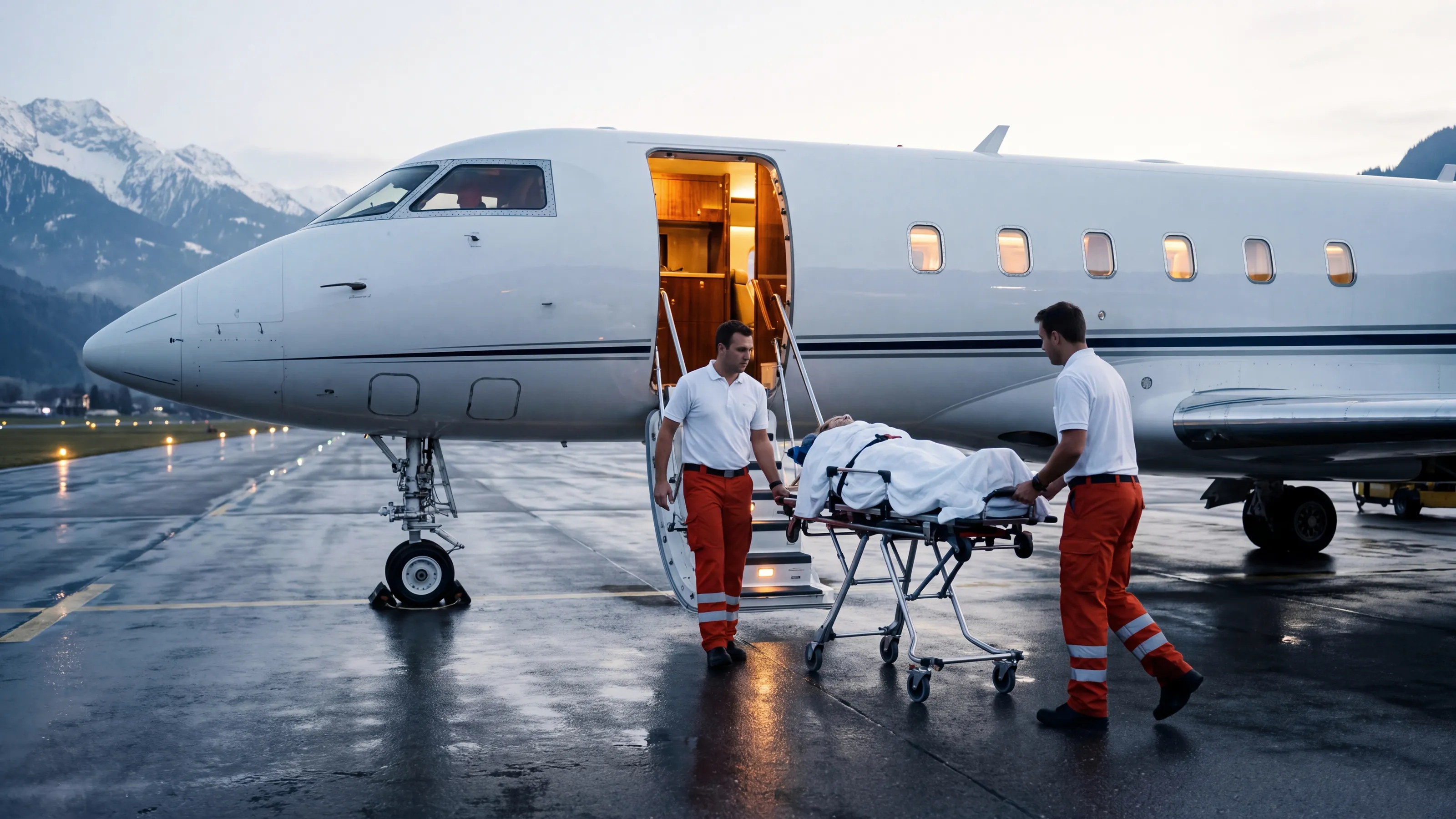
Air ambulance
Continuous intensive care en route
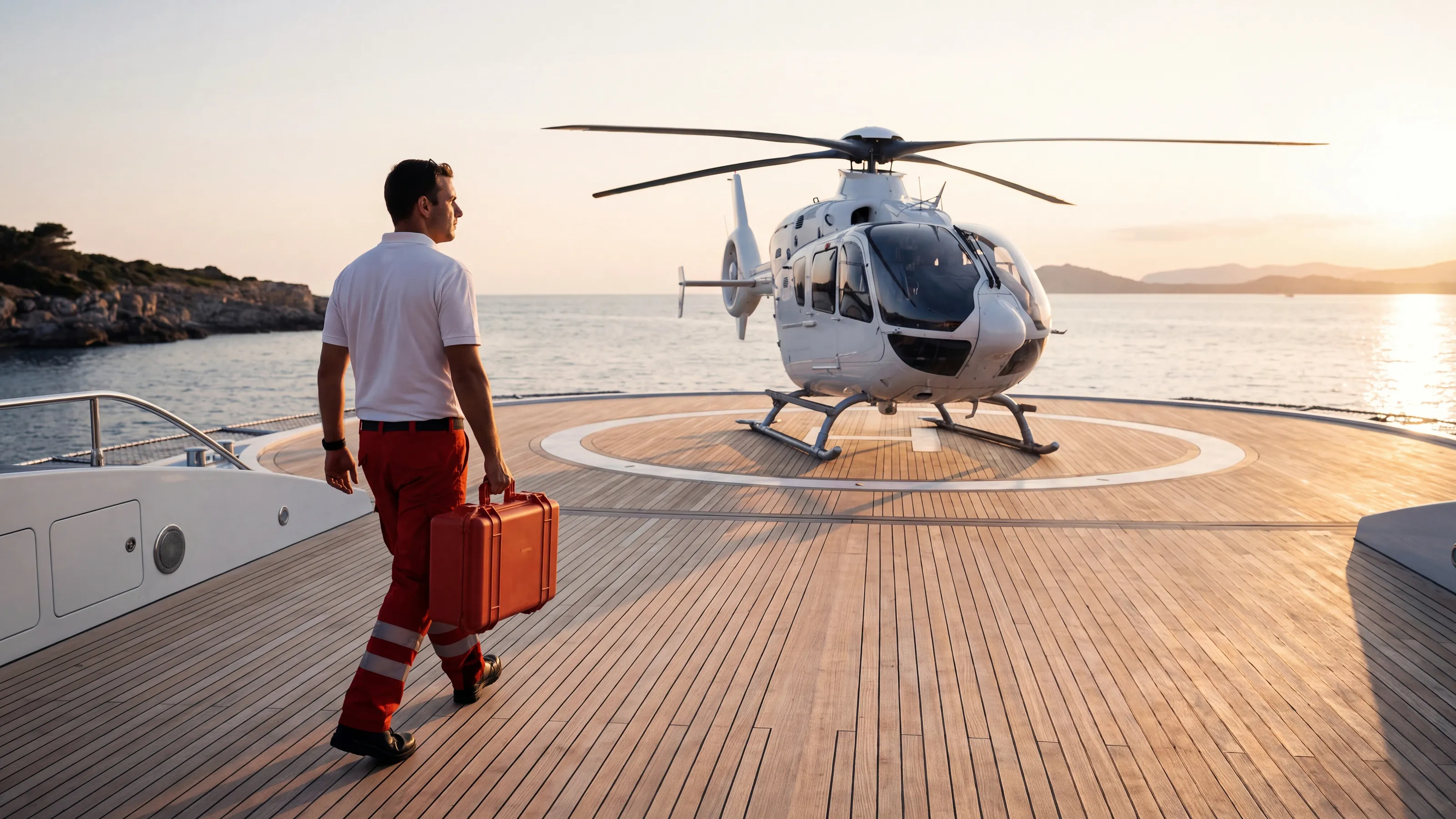
Yachts and aviation
At sea and in the air

Dubai
Head of operations on the ground